Sagan and Einstein on Cultivating a Profound Sense of Spirituality: How to Embrace Science and Reason in the Pursuit of Cosmic Awakening
The house I share with my partner is a divided one and you know what? I’m grateful for that, especially when it comes to the child we are raising. We hold very different beliefs when it comes to spirituality but we bond over the fact that both of us are vehemently against organized religion.
Perhaps it is our brand of relationship that allows us to not have strong emotions over our differences while still deeply respecting one another. I am grateful for this aspect of our connection and the ways in which it will inform how we raise our child —that is, to have an open and inquisitive mind and heart.
We talk a lot in my house about morality and the value of performing good deeds without the promise of any reward — whatsoever. No recognition, no delayed rewards, no gains — other than personal development and fulfillment. I maintain that some of the most giving, moral, and gentle people I know are Atheists. These folks are also deeply logical, celebrate the rational, and are more interested in the scientific side to life than the poetic and artistic.
These friends of mine are gems and, on the surface, one might suspect that we would have very little in common or have strong opinions of each others’ belief/lack-thereof. However, they have been the ones who have taught me the value of the unknown. They balance out my otherworldly imagination, desires, and beliefs. They ground me. I have it on good authority that I provide many of them with a desire to think bigger, trust in a process, and to be more creative in their pursuits rather than always leaning on the logical. There’s a give and take among us and I happen to think it’s beautiful.
I lead with this illustration of how I’ve been able to integrate spirituality with reason in my life — both internally and with the people I hold dear and close in my life. So often, we come across folks who believe that the spirituality and reason are not compatible, to value one is to devalue the other. For Sagan, whether you call him an Agnostic or Pantheist, his belief in God hinged on how “God” was contextually defined; he accepted the belief that God was described as a natural order to the Universe, a string of connection, rationality, and prediction that governs the natural world.
Cosmos is a Greek word for the order of the universe. It is, in a way, the opposite of Chaos. It implies the deep interconnectedness of all things. It conveys awe for the intricate and subtle way in which the universe is put together. — Carl Sagan
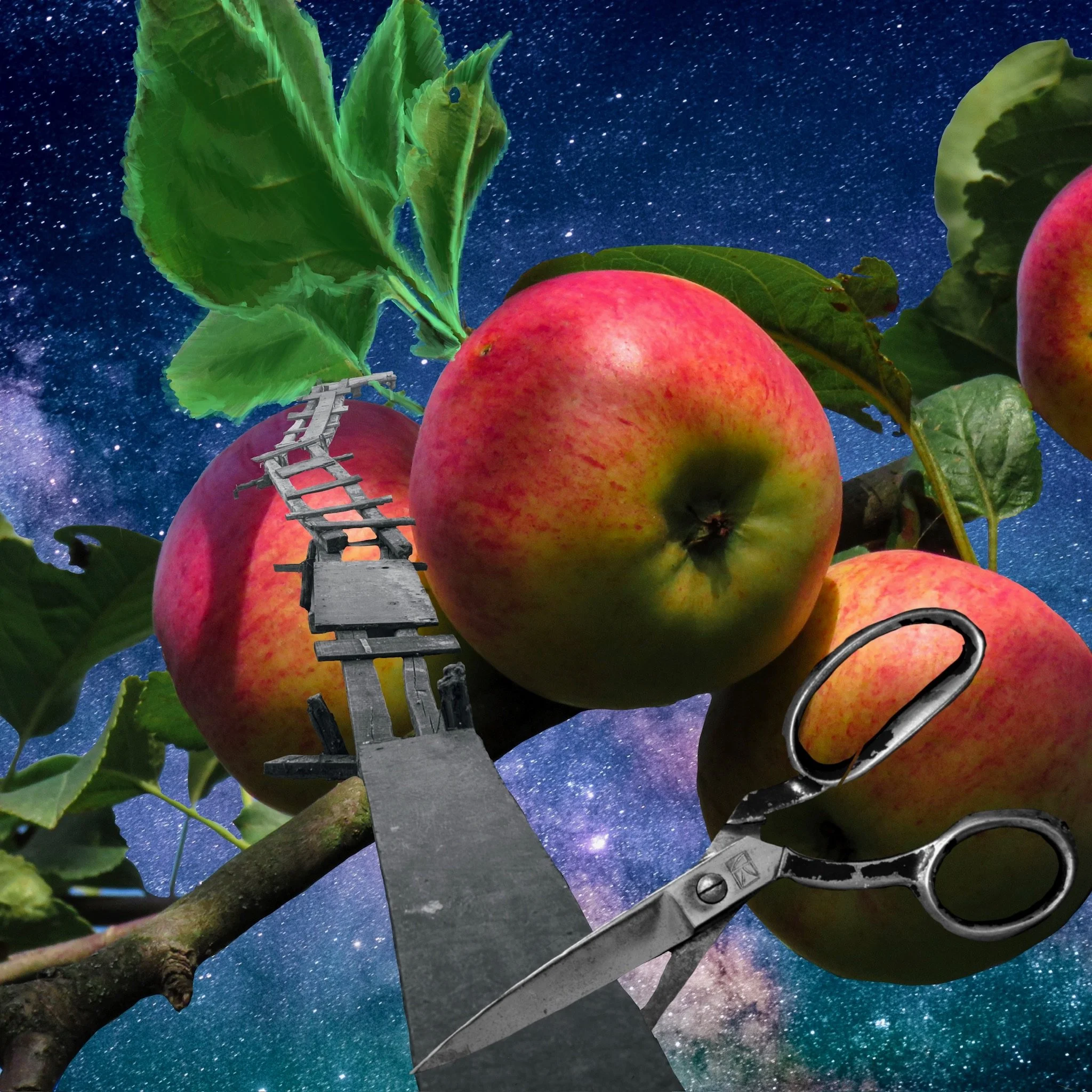
For Sagan, the reverence he had for science in relation to spirituality was grounded not in science’s ability to disprove spiritual belief, but to help clear the path — to disprove barriers in the pursuit of full understanding. Never one to belittle those who held religious and spiritual beliefs, Carl was deeply respectful of these individuals and saw the evolution of human understanding of the cosmos as a ladder to greater understanding. Contributions to the expanding body of scientific knowledge concerning the inner-workings of the cosmos is but a rung in this ladder to a more comprehensive understanding of our existence — and its purpose.
(Carl) was religious, but in his view, the traditional religious view of God was too small, with a God of — who made the world; not, perhaps, 400 billion stars in our galaxy alone, with a retinue, each star with a retinue of perhaps a hundred worlds and so many galaxies.
He found that that God was inadequate, and that, I think, one of the reasons he’s so important 10 years later and that buildings all over the world are dedicated in his memory, is because he was a kind of — he was imagining a God that would be worthy of the revelations of science — one that would reflect what we know, not one that would be mired in a moment in time thousands of years ago, before we had the ability to interrogate nature.
— Ann Druyan, author, writer, producer and, certainly not least: Carl Sagan’s wife
This sort of natural theology is not unique to Sagan, Albert Einstein viewed scientific discoveries as a key indicator of humanity striving towards the rational understanding of life and death. For Einstein, acquiring knowledge through scientific reasoning is a powerful way we can inform our faith — going beyond the blind acceptance of a greater force to celebrating these discoveries as potential indicators of a guiding universal force beyond our current understanding.
For Sagan and Einstein, the pursuit of scientific knowledge must be earnest and focused on eliminating doubt and errors through regimented processes. In this model, reason becomes a trusted confidant of spirituality and the pursuit of knowledge of God is not the beginning and end of science’s support of spiritual practices.
The further the spiritual evolution of mankind advances, the more certain it seems to me that the path to genuine religiosity does not lie through the fear of life, and the fear of death, and blind faith, but through striving after rational knowledge. — Albert Einstein
The swell of scientific literature on the art and science of mindfulness and meditation is absolutely fascinating to take in. I recently attended a Grand Rounds session where we discussed the physiological augmentations that occur in the human brain after committing to meditative practices for 6 months or more.
Mindfulness and meditation have been observed to influence brain waves by slowing beta waves to a relaxed alpha and stronger gamma waves to boost concentration. Additionally, these activities have been linked to an increase in grey matter throughout the human brain, including the cortex, sub-cortical grey and white matter, brain stem, and cerebellum. Here’s a sampling of what these areas govern in terms of human cognition:
Frontoparietal cortex: decision-making
Hippocampus: memory
Amygdala: fear, unfamiliarity
Anterior, mid and posterior cingulate, orbitofrontal cortex: impulse control, decision-making, interpersonal relationships, self-expression, flexibility, and stress tolerance
Longitudinal fasciculus and corpus callosum: inter and intra-hemispheric communication
Mindfulness and meditation are not always linked to a spiritual practice, but these discoveries illustrate how science is, by and large, boosting the credibility and mainstream adoption of these practices.
I believe that as our knowledge increases of the natural world, our internal functions must be ready to receive and react to these discoveries. We must feel confident in our existence, empowered by our ignorance, and unwaveringly committed to discovering truths. Preparing ourselves to receive this knowledge means we need to care for the ways we relate to ourselves and one another. Just as Sagan defined cosmos as an interconnectedness that underpins existence, we need to strive for this within, and among, ourselves.